


EQUITY is the long-standing lead partner of the International Legal Forum

At the 14th International Judicial and Legal Forum, Oleh Malinevskyi, Managing Partner at EQUITY, hosted an open interview entitled “Judicial Track 2026: The State of the Judicial System and Prospects for Reform”, featuring Iryna Mudra, Deputy Head of the Office of the President of Ukraine, and Stanislav Kravchenko, President of the Supreme Court.
The discussion focused on the key challenges currently facing the justice system: staff shortages, lengthy competitive selection procedures, the workload on the courts, and the next steps in reforming the judicial system.
“We are not waiting for the war to end to find solutions. Compensation mechanisms, the Special Tribunal on the Crime of Aggression against Ukraine, the protection of victims’ rights, the documentation and compensation of damages, and the prosecution of war criminals are already underway. The fight for justice has become a truly important aspect of countering the aggressor,” emphasised Oleh Malinevskyi. 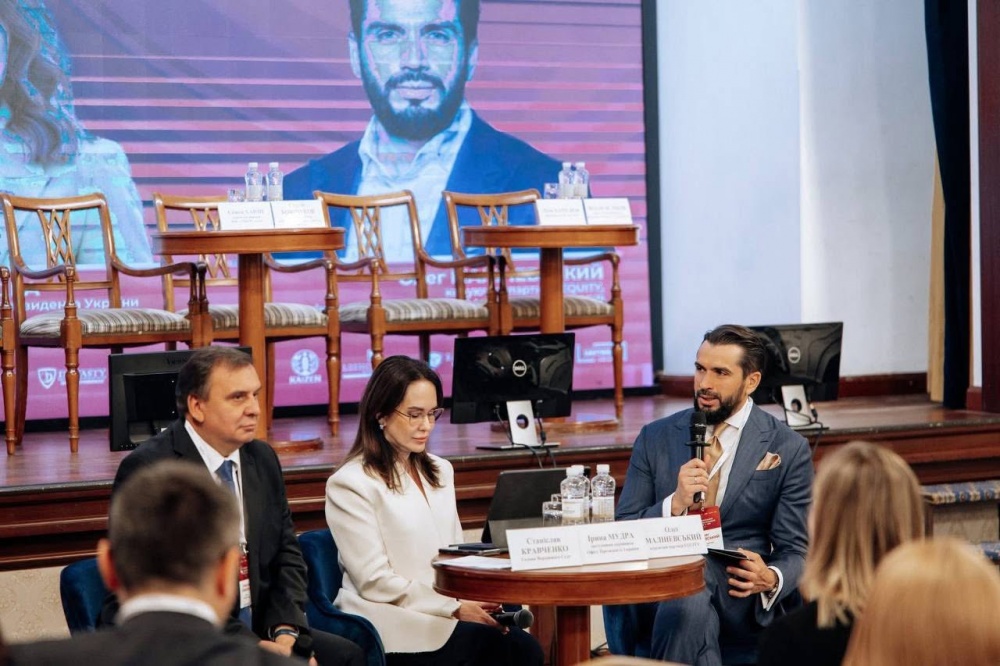
Vyacheslav Krahlevych, a partner at EQUITY, moderated the forum’s first session, which focused on strategic directions for the development of Ukraine’s judicial system in the context of martial law, European integration and ongoing institutional reforms.
The discussion centred on issues of ensuring access to justice, modernising the judicial network, the role of forensic expertise in modern judicial proceedings, restoring trust in the judiciary, and the importance of an effective judicial system for creating a secure business environment.
“Despite numerous challenges, Ukraine’s judicial system continues to demonstrate progress and retains the capacity to perform its functions even in the context of full-scale war. Its further reform requires not only internal efforts but also ongoing professional dialogue among all members of the legal community,” noted Vyacheslav Kraglevych.

On the second day of the forum, EQUITY partner Dmytro Tylipskyi delivered a presentation on the topic ‘AI Legal Tech: The Limits of Possibility in the Justice System’.
The speaker discussed the following:
In terms of its impact on humanity, the emergence of AI is already comparable to the invention of the internet or the discovery of antibiotics. It is not just a new tool, but a paradigm shift.
The legal profession is in the “red zone”: research by Microsoft and OpenAI confirms that our profession is at the greatest risk of automation. Around 44% of lawyers’ routine tasks can already be delegated to artificial intelligence.
A new level of efficiency: processing large data sets, structuring and analytics, which previously required months of painstaking manual work by a team, are now performed by AI in a matter of minutes.
‘Despite the rapid development of Legal Tech and the widespread adoption of AI in law enforcement and the legal profession, the final decision in the justice system must remain with humans. An algorithm can calculate probabilities, but only a human is capable of assessing fairness, morality and good faith in each specific case,’ concluded Dmytro Tylipskyi.

For EQUITY, fostering professional dialogue on the development of the justice system is one of its key areas of focus, as an effective judicial system is the cornerstone of the rule of law.